
HSBC TravelOne Credit Card Review: The Most Wanted Mid-Premium Credit Card in India Right Now
With Accor gone from Axis and Atlas no longer the easy answer, a gap opened in India's mid-premium travel cards — and HSBC TravelOne fits it almost perfectly.
There was a time when recommending a travel credit card in India felt almost too easy. Axis Atlas dominated conversations. Amex Platinum Travel had its own loyal fanbase.
Accor sat beautifully inside the Axis ecosystem. For people who understood miles, hotel points, and redemption strategy, the shortlist was predictable.
Then the ground shifted.
Accor moved out of the Axis ecosystem. Atlas and Amex Platinum Travel stopped being the easy fresh-application answer. The mid-premium travel-card space suddenly had a very real gap.
And that is exactly where HSBC TravelOne walked in.
The real thesis is simple:
HSBC TravelOne does not win because it is flawless. It wins because it showed up when India’s miles-and-points crowd needed a credible new contender, and it delivered enough substance to be taken seriously.
This card is not for everyone.
But for the right user, especially someone who understands airline miles, hotel loyalty points, Accor redemptions, and travel-platform stacking, this is one of the most important credit cards to discuss in 2026.
Quick Overview
| Feature | HSBC TravelOne Credit Card |
|---|---|
| Joining Fee | ₹4,999 + GST |
| Annual Fee | ₹4,999 + GST |
| Fee Waiver | Annual fee reversed on ₹8 lakh annual spend |
| Best For | Flights, hotels, travel platforms, international spends, transferable points |
| Reward Currency | HSBC Reward Points |
| Travel Reward Rate | 4 RP per ₹100 |
| Regular Reward Rate | 2 RP per ₹100 |
| HSBC Travel Portal / Hopper | Up to 6X rewards |
| Transfer Partners | 20 airline and hotel partners |
| Domestic Lounge Access | 6 visits per year |
| International Lounge Access | 4 visits per year via LoungeKey |
| Milestone Benefit | 10,000 RP on ₹12 lakh annual spend |
| Forex Markup | 3.5% + GST |
| Zero Forex Offer | No foreign exchange mark-up fee on eligible foreign-currency transactions from 15 August 2026 to 15 September 2026. ATM withdrawals are excluded; GST, network fees or regulatory charges may still apply. |
| Airport Transfers | 4 complimentary chauffeur-driven transfers per year, subject to offer terms |
| Golf Benefit | 4 golf rounds and 12 golf lessons per year |
| Eligible Cities | Chennai, Gurgaon, Delhi NCR, Pune, Noida, Hyderabad, Mumbai, Bengaluru, Kochi, Coimbatore, Jaipur, Chandigarh, Ahmedabad, Kolkata, Amritsar, Baroda, Indore, Lucknow, Nagpur and Surat |
| Network | Mastercard World |
On paper, this looks like a well-rounded travel card.
But the real story is not the feature list.
The real story is how these benefits connect with each other.
Welcome Benefits: Current Introductory Offer
HSBC TravelOne’s current welcome offer is simpler now: it is built around early activation in the first 30 days.
Download and log on to the HSBC India Mobile Banking app, then spend ₹25,000 within the first 30 days of opening the card account.
| Target | Benefit | How to think about it |
|---|---|---|
| Spend ₹25,000 in 30 days | ₹1,000 cashback + ₹3,000 PostCard Hotels voucher + 3 months’ EazyDiner Prime membership | This is the current official introductory offer for applications from 1 July 2026 to 31 December 2026, subject to HSBC terms. |
| App login condition | HSBC India Mobile Banking app download and login required | Do not ignore this step. The welcome offer depends on it. |
| Add-on cards | No separate welcome eligibility | The offer is for new primary TravelOne cardholders only. |
| Spend counting | Net sales transactions only | Refunds, reversals and non-sales charges do not count towards the welcome target. |
The visible welcome value is ₹4,000 plus the EazyDiner Prime membership. That helps recover a large part of the ₹4,999 joining fee, but only if you complete the ₹25,000 target properly.
The older ₹1 lakh in 90 days / 3,000 bonus Reward Points milestone should not be treated as a current TravelOne welcome benefit unless HSBC brings it back in a fresh offer document.
The PostCard voucher is useful only if you actually plan to use PostCard Hotels. The cashback is straightforward. The EazyDiner Prime membership adds lifestyle value if you dine out often.
The Core Reward Structure: Simple, Clean, Travel-Focused
HSBC TravelOne has a clean reward structure.
You earn:
4 Reward Points per ₹100 on flights, travel platforms, and international spends.
2 Reward Points per ₹100 on other eligible spends.
That means if your spending naturally includes flight bookings, travel aggregators, hotel platforms, and foreign currency transactions, the card starts making sense from day one.
This is not a card designed for someone whose entire spend is fuel, utilities, wallet loading, rent, tax payments, or insurance.
The accelerated earning bucket has a monthly cap. Travel and forex spends earn 4 RP per ₹100 up to the applicable monthly accelerated reward cap. After that, spends fall back to the base reward rate.
That cap matters for very high spenders. But for most practical users, the monthly limit is still generous enough to create meaningful value.
The regular eligible spend rate of 2 RP per ₹100 is not flashy. But because the points can be moved to strong partners, especially at 1:1 ratios, the base earning is still useful.
The card becomes more powerful when you stop thinking of HSBC Reward Points as “bank points” and start thinking of them as future airline miles or hotel points.
What the Reward Rate Actually Means
HSBC TravelOne transfers to Accor at 1:1
Now let us put numbers to the story.
1 Euro = ₹110 as of now.
Accor redemption value is simple:
1000 HSBC Points = 1,000 Accor Reward points = €20
So:
| Accor Points | Euro Value | INR Value at ₹110/€ |
|---|---|---|
| 1,000 points | €20 | ₹2,200 |
| 2,000 points | €40 | ₹4,400 |
| 5,000 points | €100 | ₹11,000 |
| 10,000 points | €200 | ₹22,000 |
| 12,000 points | €240 | ₹26,400 |
| 18,000 points | €360 | ₹39,600 |
| 21,000 points | €420 | ₹46,200 |
| 42,000 points | €840 | ₹92,400 |
That means:
1 Accor point = €0.02
At ₹110 per Euro:
1 Accor point = ₹2.20
And because HSBC TravelOne transfers to Accor at 1:1:
1 HSBC Reward Point = 1 Accor point = approximately ₹2.20 in Accor hotel value
So the effective reward rates become:
| Spend Type | HSBC Earn Rate | Approx Accor Value | Effective Accor Return |
|---|---|---|---|
| Regular eligible spends | 2 RP per ₹100 | ₹4.40 | 4.4% |
| Travel / forex spends | 4 RP per ₹100 | ₹8.80 | 8.8% |
| Hopper car rentals | 8 RP per ₹100 | ₹17.60 | 17.6% |
| Hopper flights | 16 RP per ₹100 | ₹35.20 | 35.2% |
| Hopper hotels | 24 RP per ₹100 | ₹52.80 | 52.8% |
This is why Accor changes the conversation.
A normal 2 RP per ₹100 card does not look exciting if you redeem badly.
But if those points become Accor points and are used properly, even the base rate can become meaningful.
And the Hopper hotel rate becomes genuinely powerful.
HSBC Rewards Marketplace: Powerful, But Not Automatic
HSBC TravelOne also gives access to the HSBC Rewards Marketplace, and this is where the card becomes genuinely exciting.
Through the marketplace, cardholders can earn accelerated reward points on travel bookings.
| Booking Type | Multiplier | Effective Earning |
|---|---|---|
| Hotels | 6X | 24 RP per ₹100 |
| Flights | 4X | 16 RP per ₹100 |
| Car Rentals | 2X | 8 RP per ₹100 |
This is the part that makes people pause.
Hotels at 24 RP per ₹100 is a very strong earn rate. Flights at 16 RP per ₹100 is also powerful. And if those points are later transferred to the right airline or hotel partner, the effective value can become very attractive.
For example, if you book hotels through the HSBC portal and later transfer points to Accor Live Limitless at 1:1, the upside can become extremely strong because Accor points have a clearer redemption value than many other loyalty currencies.
This is where the theoretical math gets exciting.
A hotel booking earning 24 RP per ₹100 can create very high future hotel value if the portal price is competitive and the points are moved to a strong partner like Accor.
Let us make that practical.
| Hopper Hotel Booking | Points Earned at 24 RP/₹100 | Accor Value at ₹2.20/RP | Effective Value |
|---|---|---|---|
| ₹10,000 | 2,400 RP | ₹5,280 | 52.8% |
| ₹25,000 | 6,000 RP | ₹13,200 | 52.8% |
| ₹50,000 | 12,000 RP | ₹26,400 | 52.8% |
| ₹75,000 | 18,000 RP | ₹39,600 | 52.8% |
This is not cashback.
You are not getting ₹26,400 instantly back on a ₹50,000 booking.
But you are creating points that can become future Accor hotel value. That is exactly why this card is powerful for people who already know they will use Accor stays.
The monthly Hopper / HSBC Marketplace accelerated cap is also important.
| Booking Type | Earn Rate | Spend Needed to Generate 18,000 RP |
|---|---|---|
| Hotels | 24 RP per ₹100 | ₹75,000 |
| Flights | 16 RP per ₹100 | ₹1,12,500 |
| Car Rentals | 8 RP per ₹100 | ₹2,25,000 |
So if you book ₹75,000 worth of hotels through the portal in a month, you can reach 18,000 RP from hotel bookings.
At Accor’s redemption value for current exchange rate:
| Accor Points | Euro Value | Approx INR Value at ₹110/€ |
|---|---|---|
| 1,000 | €20 | ₹2,200 |
| 2,000 | €40 | ₹4,400 |
| 10,000 | €200 | ₹22,000 |
| 18,000 | €360 | ₹39,600 |
This is the cleanest way to understand the Hopper benefit.
A heavy hotel booking month can create enough Accor points to meaningfully reduce the cost of a future stay.
Flight bookings through the portal can also become interesting. At 16 RP per ₹100, the card can generate a strong miles pool if you later transfer to partners like Air India, Flying Blue, British Airways, Singapore KrisFlyer, Qatar Privilege Club, or other airline programs.
Here is the flight math in Accor terms:
| Hopper Flight Booking | Points Earned at 16 RP/₹100 | Accor Value at ₹2.20/RP | Effective Value |
|---|---|---|---|
| ₹25,000 | 4,000 RP | ₹8,800 | 35.2% |
| ₹50,000 | 8,000 RP | ₹17,600 | 35.2% |
| ₹1,00,000 | 16,000 RP | ₹35,200 | 35.2% |
Again, this is not instant cashback.
But if the portal fare is competitive to OTA, these numbers are hard to ignore.
But this is where a reality check is needed.
The portal is powerful only when three things work together:
The final booking price should be competitive.
The transfer partner should be chosen intelligently.
The redemption should give good value.
If the portal price is inflated, the reward multiplier can lose its magic. If you transfer points lazily to a weak redemption, the value drops. If you redeem in panic, the card will not save you.
So the HSBC Rewards Marketplace is not automatic value.
It is a powerful tool.
And like every powerful tool, it rewards people who know how to use it.
Where the card starts looking dangerous: travel double-dip
HSBC has tied up with travel platforms like Yatra, EaseMyTrip, Paytm Travel, Cleartrip, StayVista, and AdaniOne.
These are not weak filler offers.
You are looking at headline savings such as 15% off on several travel platforms, 11% off on StayVista, and up to 20% off duty-free with AdaniOne.
| Partner / route | Headline value | How to think about it |
|---|---|---|
| Yatra | 15% off | Useful for direct travel-booking savings before points are even counted. |
| EaseMyTrip | 15% off | Creates a double-dip when paired with the 4 RP / ₹100 earn rate. |
| Paytm Flights | 15% off | Strong if platform pricing remains competitive. |
| Cleartrip | 15% off | Good for users who compare final cart price before booking. |
| StayVista | 11% off | Useful for villa-style stays and group travel. |
| AdaniOne duty-free | Up to 20% off | A niche but interesting airport-spend layer. |
Example booking math
Take a ₹20,000 travel purchase through a platform where HSBC gives 15% off. If the discount is applied instantly, the amount charged to the card becomes ₹17,000, not ₹20,000.
The instant discount saves ₹3,000.
The card’s travel earn rate then adds roughly ₹680 worth of points if you value the 4 RP / ₹100 earn rate at around 4%.
Total effective value: ₹3,680, or about 18.4% on the original booking value.
| Value Layer | Amount | Calculation |
|---|---|---|
| Instant discount | ₹3,000 | 15% off on ₹20,000 |
| Net card charge | ₹17,000 | ₹20,000 - ₹3,000 |
| Reward value | ₹680 | Approx. 4% points value on ₹17,000 |
| Total effective value | ₹3,680 | ₹3,000 + ₹680 |
| Effective return | 18.4% | ₹3,680 / ₹20,000 |
If the platform charges the full ₹20,000 first and gives the ₹3,000 later as cashback or statement credit, rewards may be calculated on ₹20,000. But for a true instant discount, ₹17,000 is the safer calculation base.
If you value HSBC points through Accor at ₹2.20 per RP, the reward layer becomes even stronger, but it should still be calculated on the net charged amount in an instant-discount scenario.
A ₹17,000 eligible travel charge earns:
₹17,000 ÷ ₹100 × 4 RP = 680 RP
At ₹2.20 per RP, those 680 RP can be worth:
680 × ₹2.20 = ₹1,496
| Value Layer | Amount | Calculation |
|---|---|---|
| Instant discount | ₹3,000 | 15% off on ₹20,000 |
| Net card charge | ₹17,000 | ₹20,000 - ₹3,000 |
| Accor-linked reward value | ₹1,496 | 680 RP × ₹2.20 |
| Total effective value | ₹4,496 | ₹3,000 + ₹1,496 |
| Effective return | 22.48% | ₹4,496 / ₹20,000 |
That is why this card becomes interesting.
You are not choosing between instant discount and future points.
When the offer and pricing line up, you can get both.
Transfer Partners: The Main Reason to Hold This Card
The biggest USP of HSBC TravelOne is not just how many points it earns.
The biggest USP is what those points can become.
HSBC TravelOne gives access to 20 airline and hotel transfer partners. Many of them are available at a 1:1 transfer ratio. For most partners, transfers are instant or completed within one day, though some partners may take longer.
This is a serious advantage.
Because in the miles-and-points game, flexibility is everything.
A card with one good redemption path is useful.
A card with multiple strong redemption paths gives you power.
Airline Transfer Partners
| Airline Program | Transfer Ratio |
|---|---|
| Air India Maharaja Club | 1:1 |
| AirAsia Rewards | 1:3 |
| Air France-KLM Flying Blue | 1:1 |
| British Airways Executive Club | 1:1 |
| Etihad Guest | 1:1 |
| EVA Air Infinity MileageLands | 1:1 |
| Hainan Airlines Fortune Wings Club | 2:1 |
| Japan Airlines Mileage Bank | 1:1 |
| Qantas Frequent Flyer | 1:1 |
| Qatar Airways Privilege Club | 1:1 |
| Singapore Airlines KrisFlyer | 1:1 |
| Thai Airways Royal Orchid Plus | 1:1 |
| Turkish Airlines Miles&Smiles | 2:1 |
| United MileagePlus | 2:1 |
| Vietnam Airlines Lotusmiles | 1:1 |
Hotel Transfer Partners
| Hotel Program | Transfer Ratio |
|---|---|
| Accor Live Limitless | 1:1 |
| IHG One Rewards | 1:1 |
| Marriott Bonvoy | 1:1 |
| Shangri-La Circle | 5:1 |
| Wyndham Rewards | 1:1 |
The hotel transfer list is the quiet differentiator.
Accor, Marriott, IHG, and Wyndham at 1:1 on one mid-premium card is a very strong proposition.
For many people, Accor is the headline.
But Marriott Bonvoy and IHG One Rewards also add real flexibility.
Airline partners are equally useful. Air India is relevant for domestic and international India-linked travel. British Airways and Qatar connect beautifully through the Avios ecosystem. Flying Blue can be useful for Europe and promo rewards. Singapore KrisFlyer remains aspirational for many Indian travellers. Etihad, Qantas, Thai, JAL, and Vietnam Airlines give additional options.
This is why TravelOne feels different.
It does not give you one locked redemption path.
It gives you a travel currency with many exits.
Reward Exclusions: This Card Is Generous, But Not Everywhere
HSBC TravelOne is a travel rewards card, not a one-card-for-everything card.
That distinction matters.
The card gives strong rewards on travel, forex, and eligible regular spends, but several categories earn zero reward points. So if most of your spending is on bills, wallets, insurance, tax, education, fuel, or rent, the card may not deliver the return you expect.
Categories That Earn No Reward Points
| Excluded Category | MCCs |
|---|---|
| Bail and bond payments | 9223 |
| Education and government | 9399, 8299, 8220, 8211, 8241, 8244, 8249, 9222, 9402, 9211, 9405 |
| E-wallets | 6540 |
| Financial institutions | 6010-6012 |
| Fuel | 5541, 5983, 5172, 5542, 5552 |
| Insurance | 6300, 5960 |
| Jewellery | 5944, 5094 |
| Money transfers | 4829 |
| Non-financial institutions | 6051 |
| Real estate agents and managers | 6513 |
| Tax payments | 9311 |
| Utilities | 4900 |
| Instant EMI / IEMI | No reward points. If an Instant EMI transaction is cancelled or pre-closed, reward points or cashback are not reinstated. |
The Practical Meaning
Do not use HSBC TravelOne expecting rewards on:
- Utility bills
- Insurance premiums
- Wallet loads
- Fuel spends
- Rent payments
- Tax payments
- Jewellery
- Education fees
- Government payments
- Real estate payments
- Money transfers
- Financial institution transactions
This is where many users can miscalculate the card.
A ₹1 lakh insurance payment may help your overall spend number depending on HSBC’s milestone or fee-waiver rules, but it will not earn reward points if it falls under the excluded MCC.
A large utility bill may make your monthly statement look big, but it will not build your miles balance.
A fuel transaction will not earn reward points, and this card should not be treated as a fuel card.
Also remember the Instant EMI fine print: HSBC says reward points are not applicable on credit card Instant EMI transactions, and points or cashback will not be reinstated if that EMI is cancelled or pre-closed.
The Right Way to Use It
Use HSBC TravelOne mainly for:
| Best Use Case | Why |
|---|---|
| Flights | Eligible airline MCCs can earn accelerated rewards |
| Travel platforms | OTAs and aggregators can earn 4 RP per ₹100 |
| HSBC Rewards Marketplace / Hopper | Can earn up to 24 RP per ₹100 on hotels |
| Eligible regular spends | Earn 2 RP per ₹100 |
| International spends during the 15 Aug-15 Sep 2026 zero-forex offer | Eligible foreign-currency POS and online transactions get no HSBC forex mark-up fee, while still earning card rewards as per card features. |
| Strategic annual spends | Useful for fee waiver and milestone targeting |
The card is generous when used in the right places.
But it is unforgiving if you assume every spend earns points.
That is why the smartest way to use TravelOne is simple:
Put travel and eligible spends on it. Avoid excluded categories unless you are using them only for milestone or fee-waiver planning.
The Accor Angle: Why This Card Became So Important
Let us talk about Accor properly.
For Indian credit card users, Accor has always been loved because it is easier to understand.
Airline miles can be complicated. Award seats can disappear. Taxes and surcharges can hurt. One airline program may be amazing for one route and poor for another.
Accor is more straightforward.
You earn points. You use them at participating Accor hotels. You reduce the cash cost of your stay.
That simplicity is powerful.
This is why Axis losing Accor changed the conversation.
And this is why HSBC TravelOne suddenly became relevant.
TravelOne gives 1:1 transfer to Accor ALL.
That means every HSBC Reward Point can become one Accor point, subject to current transfer terms.
Now combine that with the HSBC hotel portal.
If you earn 24 RP per ₹100 on hotel bookings and later move those points to Accor, you are effectively creating a strong future hotel-stay currency.
HSBC RP to Accor Value
| HSBC RP Earned | Accor Points After 1:1 Transfer | Accor Discount Value | Approx INR Value at ₹110/€ |
|---|---|---|---|
| 2,000 RP | 2,000 Accor points | €40 | ₹4,400 |
| 6,000 RP | 6,000 Accor points | €120 | ₹13,200 |
| 10,000 RP | 10,000 Accor points | €200 | ₹22,000 |
| 12,000 RP | 12,000 Accor points | €240 | ₹26,400 |
| 18,000 RP | 18,000 Accor points | €360 | ₹39,600 |
| 42,000 RP | 42,000 Accor points | €840 | ₹92,400 |
This is the exact reason TravelOne is being discussed so heavily in 2026.
The ₹12 Lakh Milestone Is Quietly One of the Smartest Pieces
TravelOne gives 10,000 bonus Reward Points when you spend ₹12 lakh in a card anniversary year.
This is one of the smartest parts of the card.
Why?
Because it improves the overall return without needing complicated redemption assumptions.
Let us look at the conservative math.
Milestone Math
| Milestone Component | Calculation | Value |
|---|---|---|
| Bonus Points | 10,000 RP on ₹12,00,000 annual spend | Around 0.83% extra return at ₹1/RP |
| Bonus Points via Accor | 10,000 RP = 10,000 Accor points | Around ₹22,000 value at ₹2.20/RP |
| Fee Waiver | Around ₹5,898 saved on ₹12,00,000 spend | Around 0.49% extra value |
| Combined Conservative Boost | 0.83% + 0.49% | Around 1.32% extra value |
| Combined Accor-Style Boost | ₹22,000 + ₹5,898 | Around ₹27,898 value |
This is before you even get into aggressive airline or hotel redemption value.
That is why the milestone matters.
At ₹12 lakh annual spend, you are not just earning regular reward points. You are also unlocking 10,000 extra points and crossing the ₹8 lakh fee-waiver threshold.
The clever part is that some categories excluded from reward earning may still help you move toward milestone calculations, depending on the applicable HSBC terms. This should always be checked before relying on it, but it makes the card more useful for users who have high annual spends across mixed categories.
The key point is simple:
The ₹12 lakh milestone makes the card’s overall math much better.
What the Math Can Look Like
Let us take a practical example.
Suppose you spend ₹8 lakh in a year.
Assume ₹2.5 lakh is spent on travel, forex, or eligible accelerated categories, and ₹5.5 lakh is spent on other eligible spends.
You earn:
₹2.5 lakh at 4 RP per ₹100 = 10,000 RP
₹5.5 lakh at 2 RP per ₹100 = 11,000 RP
Total = 21,000 RP
If you value one HSBC Reward Point around ₹1 through good transfer-partner usage, that is roughly ₹21,000 worth of travel value.
But if you are specifically using Accor as the redemption route, the math can look stronger.
₹8 Lakh Spend Case
| ₹8 Lakh Spend Case | Points Earned | Value at ₹1/RP | Accor Value at ₹2.20/RP |
|---|---|---|---|
| ₹2.5L travel / forex at 4 RP/₹100 | 10,000 RP | ₹10,000 | ₹22,000 |
| ₹5.5L regular at 2 RP/₹100 | 11,000 RP | ₹11,000 | ₹24,200 |
| Total | 21,000 RP | ₹21,000 | ₹46,200 |
| Fee waiver value | NA | Around ₹5,898 | Around ₹5,898 |
| Total potential value | NA | Around ₹26,898 | Around ₹52,098 |
And because you crossed ₹8 lakh annual spend, the renewal fee is waived.
That is strong.
Now take a ₹12 lakh annual spend example.
Assume ₹4 lakh in travel or forex spends and ₹8 lakh in other eligible spends.
You earn:
₹4 lakh at 4 RP per ₹100 = 16,000 RP
₹8 lakh at 2 RP per ₹100 = 16,000 RP
Annual milestone bonus = 10,000 RP
Total = 42,000 RP
₹12 Lakh Spend Case
| ₹12 Lakh Spend Case | Points Earned | Value at ₹1/RP | Accor Value at ₹2.20/RP |
|---|---|---|---|
| ₹4L travel / forex at 4 RP/₹100 | 16,000 RP | ₹16,000 | ₹35,200 |
| ₹8L regular at 2 RP/₹100 | 16,000 RP | ₹16,000 | ₹35,200 |
| Milestone bonus | 10,000 RP | ₹10,000 | ₹22,000 |
| Total | 42,000 RP | ₹42,000 | ₹92,400 |
| Fee waiver value | NA | Around ₹5,898 | Around ₹5,898 |
| Total potential value | NA | Around ₹47,898 | Around ₹98,298 |
At a conservative ₹1 value per point, that is roughly ₹42,000 in travel value on ₹12 lakh spend, before considering additional travel discounts, lounge access, airport transfers, welcome benefits, or stronger redemption value.
At an Accor-style value assumption, the theoretical value can become much higher.
But this is where discipline matters.
Accor value is useful only if you actually stay at Accor properties and redeem points properly. If you do not use Accor, do not assign Accor value to your points.
That is why TravelOne becomes very interesting for people who can naturally spend ₹8 lakh to ₹12 lakh annually.
Below that range, the card can still work.
But the magic is much stronger when the fee waiver and milestone bonus come into play.
Forex: Standard 3.5%, But Zero-Forex Offer Is Back
HSBC TravelOne gives 4 RP per ₹100 on international spends.
At first glance, this sounds strong.
But the card has a 3.5% forex markup plus GST, which brings the effective cost to roughly 4.13%.
So the base math looks like this:
Forex Math
| Forex Item | Value | Interpretation |
|---|---|---|
| Reward Value at ₹1/RP | Around 4% | Good on paper because international spends earn the travel rate |
| Reward Value via Accor at ₹2.20/RP | Around 8.8% | Strong if you actually use Accor well |
| Forex Cost | Around 4.13% | 3.5% markup plus GST makes the base math weak |
| Net Base Outcome at ₹1/RP | Around -0.13% | Not a true low-forex champion without an active offer |
| Net Accor Outcome | Around +4.67% | Works only if you value and use Accor points properly |
| Zero Forex Offer | 15 August 2026 to 15 September 2026 | No HSBC foreign exchange mark-up fee on eligible foreign-currency transactions during the offer period. |
| Offer Exclusions | ATM withdrawals, disputed transactions and corporate credit cards excluded | Posting date in HSBC systems decides eligibility; non-mark-up charges like GST, network fees or regulatory charges may still apply. |
This is very important.
TravelOne is not permanently a zero-forex card. The standard forex markup remains 3.5% plus GST outside promotional windows.
The new HSBC zero-forex offer changes the short-term math: from 15 August 2026 to 15 September 2026, HSBC says no foreign exchange mark-up fee will be levied on eligible foreign-currency transactions.
This is where the offer starts looking unusually strong for Accor users.
Because international transactions earn 4 RP per ₹100, and HSBC points transfer 1:1 to Accor, you can potentially extract around 8% to 8.8% value on eligible foreign-currency spends if you value Accor points at ₹2.20 each. For a forex credit card, that is a serious number.
| International Forex Accor Math | Calculation | Approx Value |
|---|---|---|
| International spend | ₹10,000 | Base example |
| Reward Points earned | 4 RP per ₹100 × ₹10,000 | 400 RP |
| Accor value assumption | 400 RP × ₹2.20 per RP | ₹880 |
| Effective Accor return | ₹880 ÷ ₹10,000 | 8.8% |
| During zero-forex offer | No HSBC forex mark-up fee on eligible transactions | Potentially around 8%+ value if you redeem through Accor well |
The catch is important: this is not cash in hand. It is redemption value. It works only if you actually use Accor well and if the transaction qualifies under HSBC’s zero-forex offer terms.
This is not the older June cashback wording. The revised offer is cleaner: no HSBC forex mark-up fee during the offer period, over and above the card’s regular rewards.
The important dates are 15 August 2026 to 15 September 2026, both dates inclusive. Since eligibility is based on posting date in HSBC’s systems, avoid last-day transactions if the waiver is important to you.
Eligible foreign-currency transactions at merchant POS and online are covered. ATM withdrawals are not covered. Disputed transactions are not eligible. Corporate credit cards are excluded.
Also note the fine print: the waiver does not cover other charges such as GST, card-network cross-border fees or regulatory levies. After 15 September 2026, compare TravelOne again with dedicated low-forex or zero-forex cards before swiping abroad.
Final Verdict: Why HSBC TravelOne Works
HSBC TravelOne is not a perfect card.
The standard forex markup is weak outside offer windows. The exclusion list is long enough to matter. And if you do not understand transfer partners, travel portals, or redemption value, you will probably not get the best out of it.
But even with those caveats, TravelOne is one of the most relevant mid-premium travel cards in India right now.
The reason is simple: it fills a gap.
After Accor moved out of the Axis ecosystem and Atlas stopped being the obvious fresh-application answer, there was room for a serious travel card that could offer transferable points, hotel partners, lounge access, and decent milestone value without entering ultra-premium territory.
TravelOne fits that space well.
What Works Well
| Area | What TravelOne Offers | Why It Matters |
|---|---|---|
| Travel spends | 4 RP per ₹100 | Good earn rate on flights, travel platforms, and forex spends |
| Regular eligible spends | 2 RP per ₹100 | Useful base earning if points are transferred well |
| HSBC Rewards Marketplace hotels | Up to 24 RP per ₹100 | Strongest earning route, especially for Accor users |
| HSBC Rewards Marketplace flights | Up to 16 RP per ₹100 | Good way to build a larger miles balance on flight bookings |
| Accor transfer | 1:1 | Main reason many travellers will look at this card |
| Hotel partners | Accor, Marriott, IHG, Wyndham, Shangri-La | Gives hotel redemption flexibility |
| Airline partners | Air India, Flying Blue, British Airways, Qatar, KrisFlyer and more | Gives multiple airline-mile exits |
| Domestic lounges | 6 visits per year | Useful for regular domestic travel |
| International lounges | 4 visits per year | Helpful for international trips |
| Airport transfers | 4 per year | A premium-style benefit in a mid-premium card |
| Milestone bonus | 10,000 RP on ₹12 lakh spend | Improves annual return meaningfully |
| Fee waiver | On ₹8 lakh annual spend | Makes the card stronger for high spenders |
| Travel discounts | Yatra, EaseMyTrip, Paytm Travel, Cleartrip and more | Adds instant savings before points are counted |
| Lifestyle perks | Dining, movies, golf, duty-free offers | Nice extras, not the main reason to apply |
Where You Need to Be Careful
| Watch-Out | Why It Matters |
|---|---|
| Forex markup | Standard markup is 3.5% + GST outside offer windows; the current zero-forex offer is dated 15 Aug-15 Sep 2026 |
| Reward exclusions | Fuel, wallets, utilities, insurance, rent, tax and similar categories may earn no points |
| Portal pricing | HSBC Rewards Marketplace is useful only if final prices are competitive |
| Redemption quality | Poor transfers or lazy redemptions can reduce card value |
| Milestone dependence | The card becomes much stronger if you can hit ₹8 lakh or ₹12 lakh annual spends |
| Transfer changes | Partner lists and ratios can change, so points should not be hoarded forever |
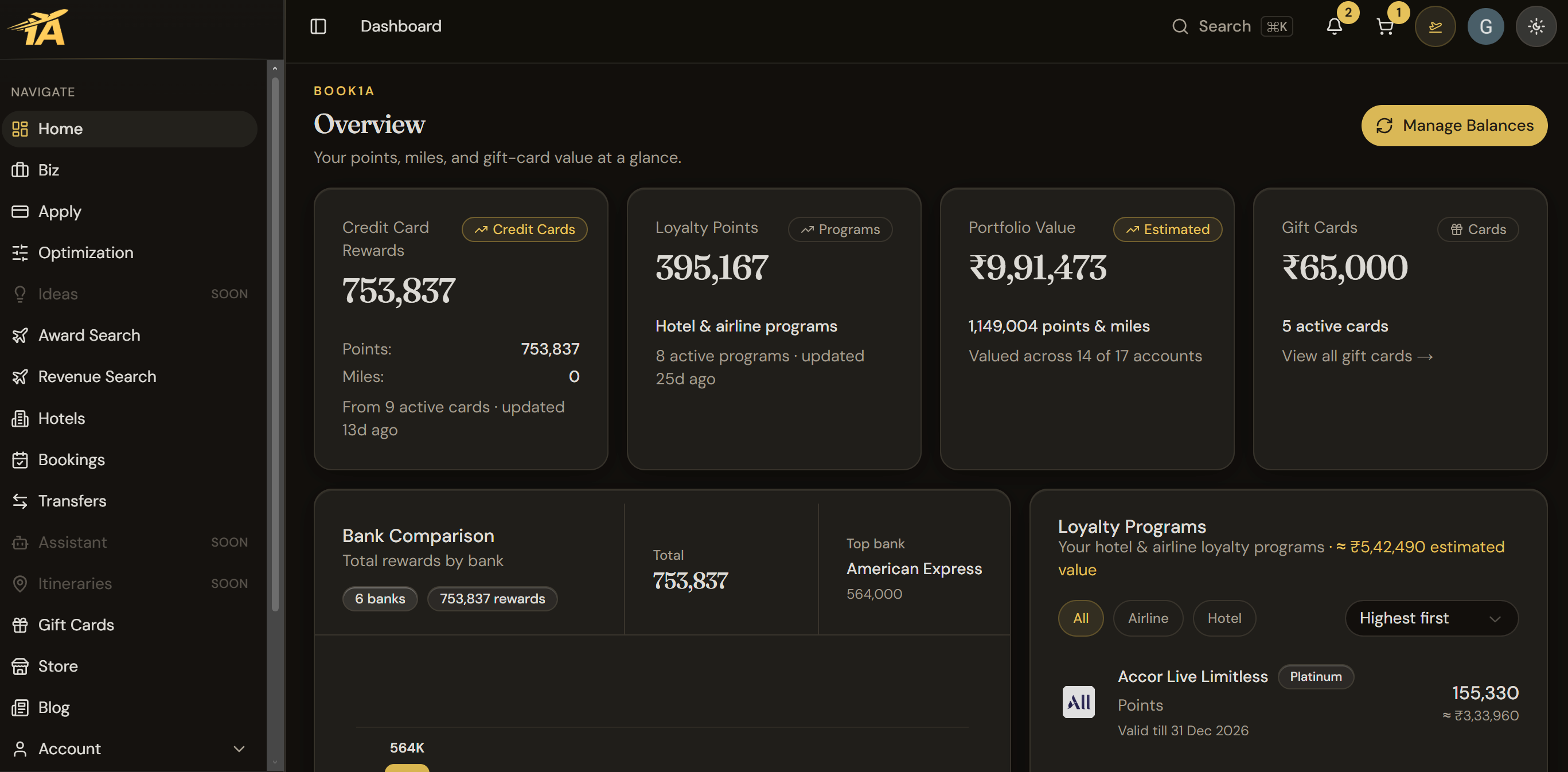
By the way, this is exactly why we are building Book1A.
Most people have credit cards, reward points, vouchers, miles, hotel memberships and offers scattered across different apps, emails, screenshots and memory. The problem is not just earning points. The real problem is knowing what you own, where it can be used, when it expires, and how to extract the best value from it.
That is where Book1A starts.
Our free Onboarding plan gives you access to your own Book1A dashboard, where you can track your cards, points, miles, vouchers, expiry dates, transfer routes, hotel deals, Store1A offers and important rewards updates in one place. It is built for anyone who wants their points life to finally feel organised.
But if you want to go beyond tracking and actually build a strategy, Book1A also offers personalised credit card consultancy.
Because your points were never meant to sit idle. They were meant to take you somewhere.
We help you build a personalised roadmap for your cards, spends, points, miles and travel goals. From choosing the right card for the right expense to optimising reward points, milestone benefits, transfer partners, hotel stays and flight redemptions, we create a clear strategy around your lifestyle.
This is for people who want to enjoy the real power of credit card rewards without spending hours doing maths, comparing permutations, checking caps, reading fine print and second-guessing every redemption.
You focus on better vacations, better hotels, better flights and better savings.
We focus on the strategy.
A free dashboard to bring everything in one place.
A paid consultancy layer when you want a complete credit card and rewards roadmap.
And a smarter way to make your points work harder for you.
The Simple Reading
| If You Are This User | TravelOne Makes Sense? |
|---|---|
| You travel regularly | Yes |
| You use Accor or want hotel points | Yes |
| You can spend ₹8 lakh annually | Yes, because the fee can be waived |
| You can spend ₹12 lakh annually | Even better, because of the 10,000 RP milestone |
| You want simple cashback | No |
| Most of your spends are excluded categories | No |
| You do not want to learn transfer partners | Probably not |
| You want a zero-forex card forever | No. This is a dated zero-forex offer from 15 Aug to 15 Sep 2026, not a permanent card feature |
Final Take
None of TravelOne’s benefits alone makes the card unbeatable.
But together, they create a strong travel package.
That is the real appeal of HSBC TravelOne. It does not just give you points and leave you guessing. It gives those points multiple good exits.
And for people who know how they want to redeem, that is where the value is.
The Book1A Take
For Book1A readers, the recommendation is simple.
Get HSBC TravelOne if you travel regularly, understand loyalty programs, and want a flexible travel currency that can become airline miles or hotel points.
Use it for eligible travel spends.
Check HSBC Rewards Marketplace pricing before booking hotels and flights.
Stack travel platform discounts when they beat portal pricing.
Transfer points to strong partners.
Use Accor when hotel value makes sense.
Do not waste points on poor redemptions.
Do not treat zero-forex promotions as permanent. The current HSBC offer is dated 15 August 2026 to 15 September 2026.
Do not ignore exclusions.
And most importantly, do not collect points without a plan.
Because in the travel rewards game, the person who knows where the points will go always wins over the person who only knows how many points they earned.
HSBC TravelOne is not just the most discussed mid-premium travel card of 2026.
For the right user, it may also be the most useful one.
Especially if the question is:
“What is the next good way to fund my Accor stay?”
Right now, HSBC TravelOne is one of the strongest answers.
Featured card
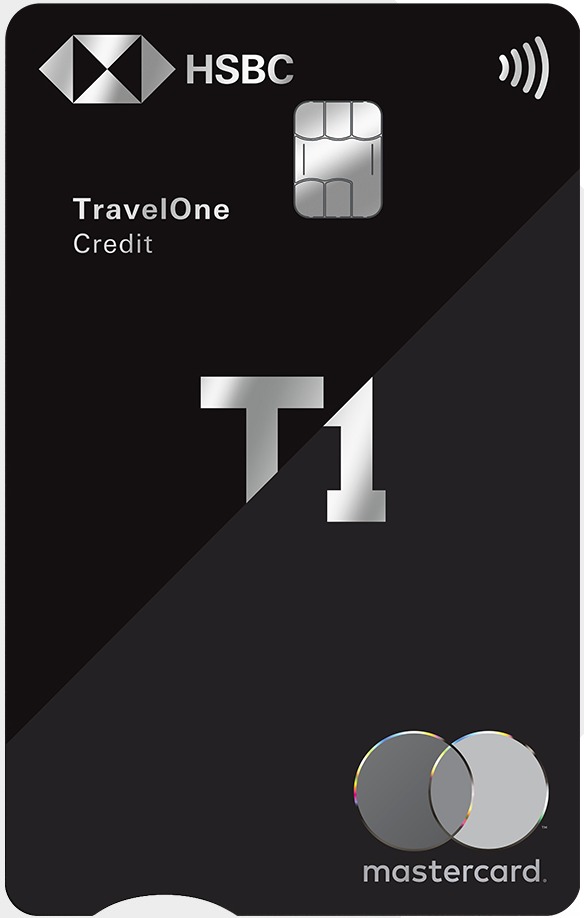
HSBC TravelOne Credit Card
₹4,999 join · 0.99% forex · 4 RP per ₹100 on travel
Complimentary Runway Plan when your new card is activated
Apply now